Pad Project Zambia Launches!
Back in October of 2019 I took an online class on global pandemics. (I know really spooky timing.) I was looking to learn something new, and it sounded interesting. One of the mantras that the global health gurus repeated over and over again was: Staff, Stuff, and Systems. There may have been a fourth S on the list, but I can’t remember now. Anyway, what they all seemed to be saying was how successfully a place survived a major crisis depended largely on how many and how well-trained a region’s staff was, how much and how high-quality their stuff was, and how organized and wide-ranging their systems were.
The prognosticators interviewed for the course were quite sure about the Western world’s (and select Eastern countries like China and Japan’s) ability to weather a global pandemic (seemed smug at the time and now laughable) as compared to our counterparts in the “developing” world—aka most of Africa, especially sub-Saharan, as well as much of Southeast Asia, and South America. We all know how that turned out. Seems having plentiful staff, stuff, and systems doesn’t make you immune from a crisis.
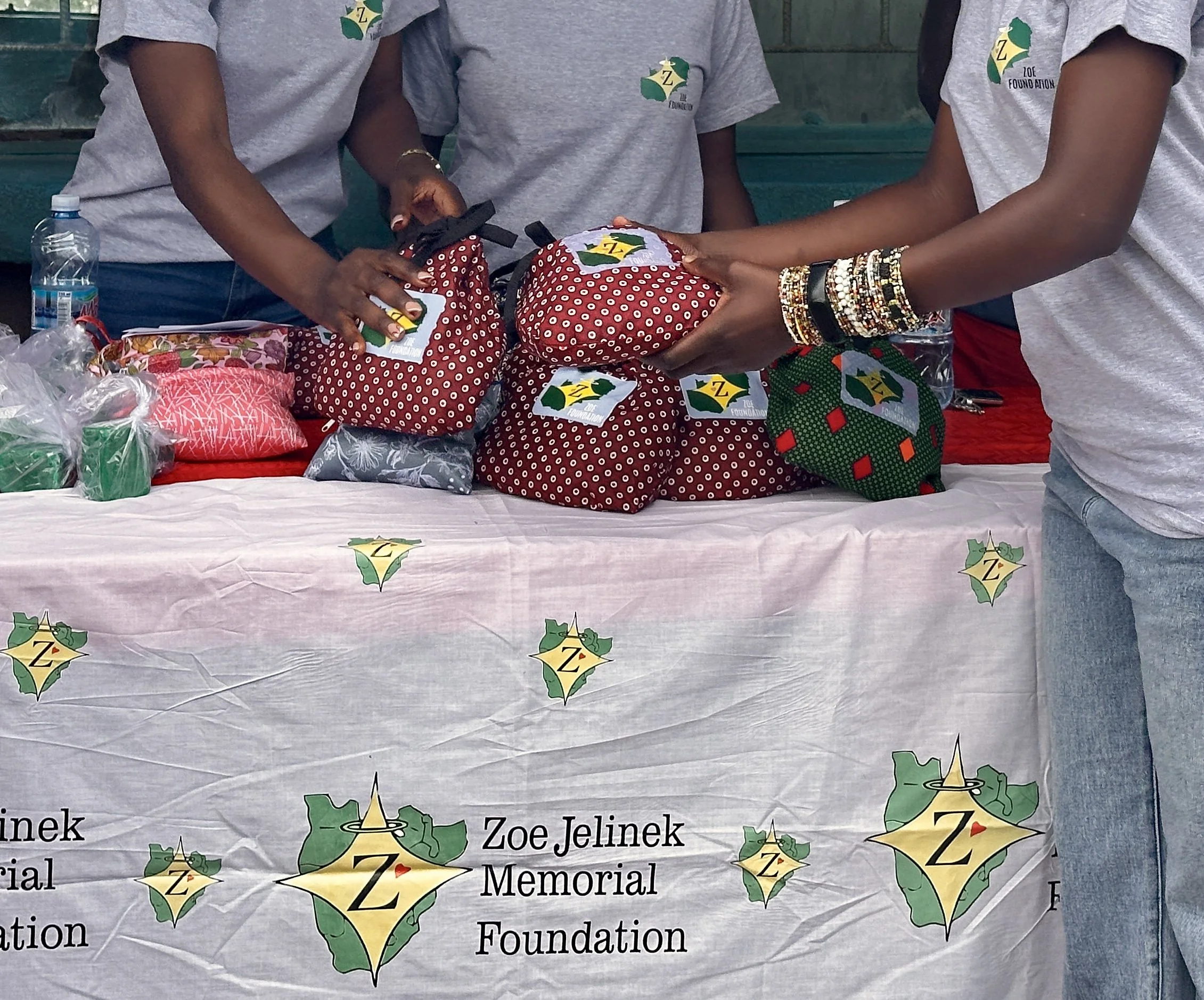
When Naomi Mungo Kovas, the director of our foundation, introduced the idea of launching a project that would produce (locally) and distribute (regionally) washable, and thus reuseable, sanitary pads to girls, it seemed like just the kind of impactful, elegant, and scalable solution we like to work on. We love working with local tradespeople on all our projects and, because our mission is to support education efforts in Southern Africa, Pad Project Zambia, as it came to be called, does just that.
As it turns out, quite a few girls in Zambia (especially those who come from poor economic conditions) miss school on the days they are having their periods for lack of adequate supplies. And these missed days start impacting their performance in school, leading to many eventually dropping out altogether by 7th or 8th grade. This was the problem in a nutshell, as described over and over again by teachers and principals at the schools Naomi was visiting.
This seemed like a problem we could work on. We had the staff (in Naomi with help from friends and family on the ground and our team here in the US) and a system (identify a school for our pilot, produce the pads with local tradespeople, and then follow-up a month later to get feedback from the girls, then make tweaks as needed and identify a new school, wash, rinse, repeat, so to speak 😊). So now for the stuff. We wanted to source the material locally if possible, though we did initially bring over some of the harder to find material from the States last June, along with some protypes we bought online to help us reproduce the pads locally. With all of this in place, seven months later on February 6, Naomi, accompanied by local health and government officials, some volunteers, and even some colleagues from several other local non-profits, delivered forty bags (one for each girl in grades 6 and 7) of five pads each to the rural Natebe Community School. And, in true Zambian fashion, this was no low-key affair. It was a full celebration with dances, music, and food. It was a day of female empowerment for sure. In a few weeks, Naomi will return to gather feedback from the girls. The cost for this pilot project? $436 dollars (that’s just under $11 per girl. $11 to potentially keep a girl in school). Now that seems like a very good and efficient use of stuff, staff, and systems.